モンテフーリオ : Montefrio、スペイン

|
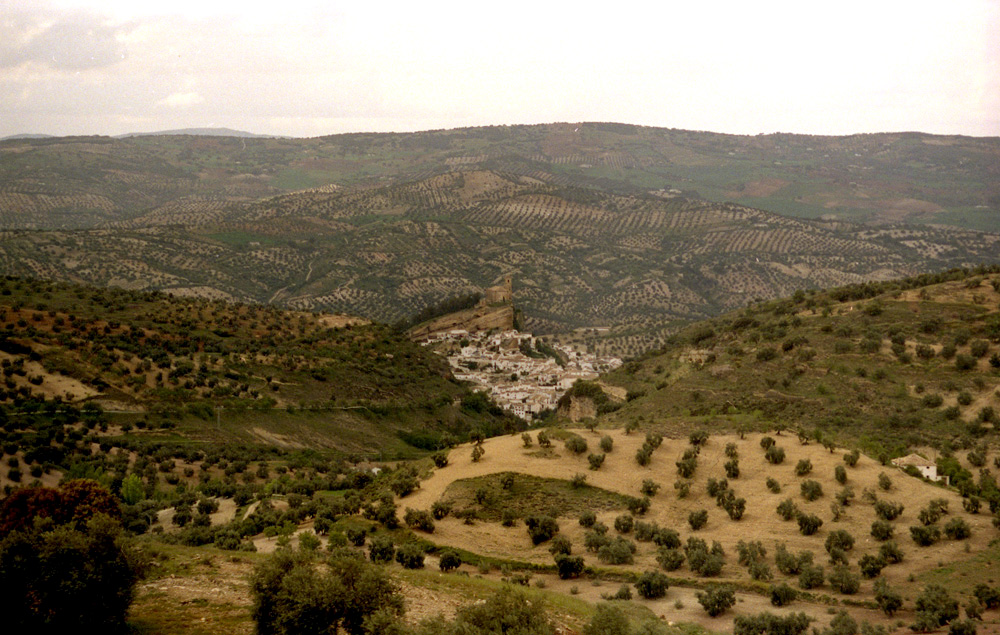
Located off the tourist trail in the
northwestern corner of Granada province near the Cordoba border,
this friendly village enjoys one of the region's most striking
settings, with one of its churches perched on top of a bare, rocky
pinnacle, overlooking the town and its surrounding hillsides clothed
in olive groves and fields of cereal crops. It nestles between two
memorable hilltop churches; you can't miss either of them since they
dominate the skyline. On the rocky outcrop is the Iglesia de la Villa, which is well worth the steep climb from town to visit it and enjoy the magnificent panoramic views that often feature in the region's guidebooks and posters. The church was built on the site of a Nasrid castle. In a key strategic location, the Alcazaba was constructed in the mid-14th century to help defend the Muslim kingdom of Granada and prevent an invasion by the Christians. It is believed to have been designed by the same architect who was in charge of the Alhambra. There was also a watchtower on the castle hill, which formed part of an extremely effective network of lookout posts used to stand guard over important routes over Granada's vega (plain). After conquering Montefrío in 1486, the Catholic Monarchs ordered the castle to be demolished and the church built in its place. The architect Diego de Siloé later became involved in the church's design, which has Mudéjar, Gothic and Renaissance features. You can see ruined sections of the castle walls around the church. The numerous traces of Montefrío's rich history are described in the guidebook Roads and Trails of Montefrío by local resident Lawrence Bohme, on sale at the town's tourist office. Although the church no longer holds services, there is a small history museum inside it, the Centro de Intepretación La Centinela, with interactive displays on the former castle, the church and the conflict between the Muslims and the Christians in 15th-century Granada. It's open Monday to Friday from 12pm to 2pm. Down in the centre of town is the pantheon-style Iglesia de la Encarnación, which has a huge domed roof and was designed in the 18th century by the acclaimed neoclassical architect Ventura Rodríguez. |
||||||
 |
 |
 |
||||
 |
 |
 |
||||
 |
 |
 |
||||
 |
 |
 |
||||
 |
 |
 |
||||
 |
||||||